
Discover the timeless beauty and durability of red oak wood veneer—a material that brings natural character and long-lasting quality to any space.
In this blog, we’ll explore everything you need to know about American red oak veneer and how it can add warmth and elegance to furniture, interiors, and architectural designs.
1. What is red oak veneer?
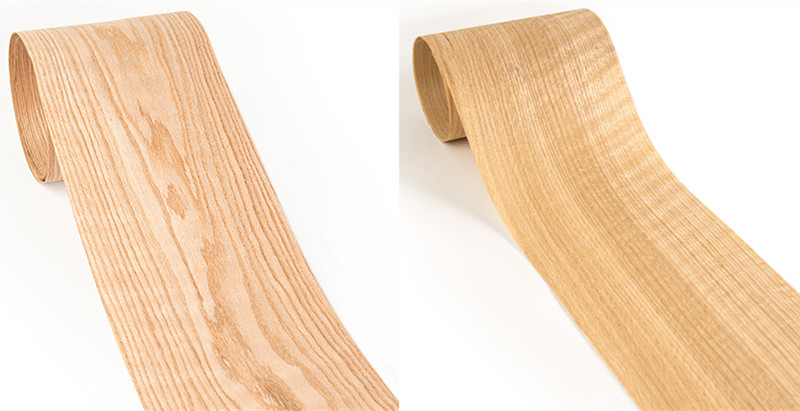
Red oak veneer is popular for its versatility, affordability, and durability.
Scientifically known as Quercus rubra, it’s native to the U.S. and parts of Canada.
Red Oak logs grow quickly and have a lower density and hardness than white oak, making them a cost-effective choice for various uses.
The veneer is made by slicing thin sheets from natural Red Oak logs and is commonly applied to plywood or MDF for furniture, doors, wall panels, and interior decor.
2. How is red oak veneer made?
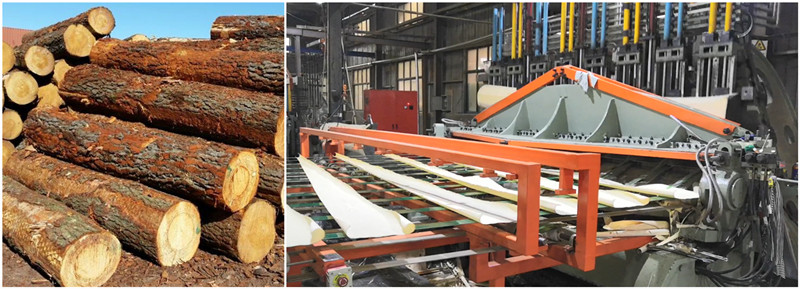
The process of producing red oak veneer involves several stages to ensure that it retains its strength, beauty, and quality.
Here’s an overview of the process:
2.1 Selecting and cleaning the logs
We choose high-quality American red oak logs and remove any unwanted wood pieces, ensuring smooth and clean wood logs for slicing.
2.2 Steam process
Red oak veneer wood is steamed to keep the wood wet. It could prevent the red oak veneer sheets from cracking during the cutting process. The steaming process also ensures that the red oak wood maintains its strength and flexibility for easier handling and application.
2.3 Wood slicing
Using different cutting methods, we create a variety of grain patterns, such as crown cut (flat cut), quarter cut (rift cut). The slicing method determines the grain structure and visual effect of the red oak wood veneer, allowing for a range of finishes to suit different styles.
2.4 Drying
Once the veneer is sliced, it’s carefully dried to prevent cracking or deformation. Proper drying is essential to maintaining the integrity and quality of the red oak veneer throughout its lifespan.
2.5 Grading
After drying, the red oak veneer is inspected for quality. The grain, thickness, and color of each sheet are assessed to ensure they meet the required standards. The veneer is then graded based on these factors, allowing you to select the best option for your needs.
3. Advantages of red oak veneer
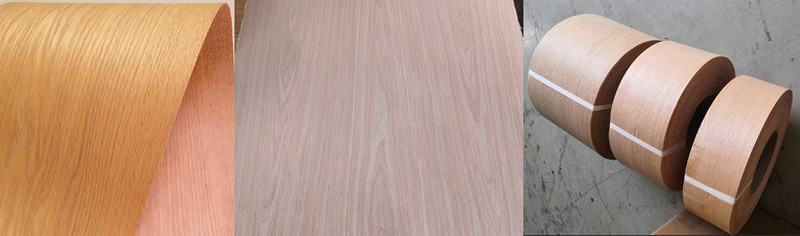
Veneer red oak is popular for many reasons. It offers several advantages that make it a preferred choice for a wide range of applications:
3.1 Beautiful:
Red Oak wood veneer shows the natural grain of the wood, with a rich, warm, pinkish color. This adds a unique and inviting tone to any space, making it an excellent choice for interior decoration.
3.2 Affordable alternative to solid wood:
Compared to solid oak wood options like American white oak or European oak, Red Oak wood veneer sheets offer a more budget-friendly solution without losing quality or appearance.
3.3 Durable:
When applied to surfaces like plywood or MDF, Red Oak veneer is less likely to warp or change shape. It offers better stability than solid oak wood and is resistant to daily wear and tear, making it perfect for high-use furniture such as cabinets, door frames, and tables.
3.4 Wide Application:
Red oak veneer is extremely versatile. It can be used for various decorative wooden items, such as cabinet doors, photo frames, decorative wall panels, wooden boxes, and even jewelry trays. Whether you’re renovating your home, decorating an office, or working on woodworking projects, American veneer red oak is an excellent choice.
3.5 Easy Maintenance:
Maintaining a red oak veneered panel is simple. Cleaning is as easy as wiping with water and a cloth. Additionally, if any damage occurs, it can be easily repaired using matching wood veneer, keeping your projects looking pristine for longer.
4. Types of red oak veneer
4.1 Standard thicknesses (0.4mm–2mm)
Our factory produces natural red oak wood veneer with a standard thickness of 0.4mm, 0.5mm, 1mm, and 2mm, suitable for a wide range of applications such as furniture, wooden doors, and cabinets. Those thicknesses provide a good balance of flexibility and durability, making it easy to work with while maintaining high-quality performance for various projects.
4.2 Engineered red oak veneer
Engineered red oak veneer, also known as reconstituted red oak veneer, recon veneer, composite veneer, artificial veneer, precomposed veneer, or man-made oak veneer, offers a few helpful benefits:
• The grain is more consistent, unlike natural wood, which can vary.
• The color is even, avoiding the unevenness that can come with dyeing.
• It’s a more affordable option.
If you’re working with a limited budget but still want the look of high-end wood, engineered oak veneer could be a great choice.
You can order red oak veneer with any color and thickness you need.
Our standard size for red oak engineered veneer is 2500 × 640 × 0.4 mm.
Of course, we can also customize the dimensions according to customer requirements.
4.3 Fleece/Paper-backed red oak veneer
Super-thin red oak wood veneer (0.2-0.25 mm) is generally used by attaching material to its back.
Fleece-backed:
Some of the veneers have fleece pasted on their backs, and this has several advantages.
a. Improved Stability: The fleece backing helps enhance the stability of the veneer, reducing swelling, contraction, and cracking.
b. Easier Bonding: It makes it easier to bond the veneer with the substrate, simplifying the construction process.
c. Increased Flexibility: The fleece backing adds flexibility, allowing the veneer to better adapt to furniture with uneven surface shapes.
d. Highly cost-effective
Paper-backed:
Paper backed veneer has similar functions to the product with fleece on the back, but the price is a little higher.
4.4 Red oak veneer rolls
American red oak veneer rolls can be divided into two types: edge banding and wrapping.
• Edge banding is used for covering the edges of tabletops, Plywood/MDF veneered boards, door edges, and cabinets.
• Veneer wrapping is a thin layer applied to wrap molding profiles.
4.5 Matched red oak veneer
In the production of interior doors, wardrobes, and furniture, matching veneer layons play a key role.
By aligning patterns, red oak veneer creates beautiful layons.
You can choose from common book-matched, slip-matched, or cross-matched red oak veneer sheets.
Custom options, like diamond-matched or reverse diamond-matched layons, are also available upon request.
4.6 Dyed red oak veneer
Because red oak wood has the most competitive cost for all the oak wood veneers, most clients like to choose red oak veneers to make the dyed veneer.
4.7 Special surface styles red oak veneer
Finally, I would like to introduce two special surface designs.
If you are in search of a distinctive style, you might find this appealing.
Rough-sawn cut red oak veneer
There are many surface styles available for wood veneer. This particular veneer red oak has a unique grain that gives it a rough and uneven texture.
If you appreciate a more natural, rustic style, this rough sawn cut red oak veneer might be just what you’re looking for.
Woven red oak veneer
We can weave specific patterns with red oak veneer.
The thickness of the weave veneer is generally between 0.5-1mm. We offer customization services. Please tell us the pattern you like.
5. Applications of red oak veneer
Red oak veneer is widely used in interior design and woodworking due to its aesthetic appeal and practicality.
Here are some of the most common applications:
5.1 Veneered panels
Most of the red oak wood veneers are applied to plywood, MDF, particleboard, or blockboard as the surface decoration layer.
5.2 Wood veneered doors
As the most competitive oak wood, red oak is widely used as the interior wood door skin.
5.3 Furniture
Not only red oak veneer, but also red oak veneered panels are a good choice for wood furniture manufacturing.
5.4 Wall panels
Usually, we press 5mm thick natural red oak veneers on plywood, MDF, or fleece.
Then make the milled wall panels according to the client’s requests.
6. Key factors when buying American red oak veneer
When purchasing red oak veneer, several factors should be considered to ensure that you choose the best product for your project.
Here’s what you need to know:
6.1 Grain
The slicing method of the wood veneer determines its grain pattern. Common options include rift cut, flat cut, or rotary cut.
6.2 Thickness
The thickness of red oak wood veneer affects both its price and application. Common thicknesses range from 0.25mm to 2mm, with 0.4mm and 0.5mm being the most popular for general applications.
6.3 Grade
Wood veneer is graded internationally (AAA, AA+, AA, A+, etc.) to indicate quality, but in China, grading definitions may vary by factory, leading to confusion. To avoid issues when ordering oak veneer sheets, send clear pictures to the supplier. This helps ensure they understand your requirements and provide the right veneer for your project, saving time and effort.
6.4 Length and width
The standard width of red oak veneer sheets is 90mm and up, length is random 2500mm and up. Wider veneer sheets can be achieved by splicing pieces together.
6.5 Price
The price of red oak veneer sheets depends on thickness, grade, and features like backing materials.
Thicker, higher-grade veneers with special backings cost more.
To avoid misunderstandings, clarify pricing terms like FOB or CIF with your supplier.
Discussing these terms upfront helps avoid surprises with shipping, handling, and insurance fees.
Defining pricing details ensures you get the best value for your investment.
Conclusion
American red oak veneer is a versatile, durable, and cost-effective material ideal for a range of applications.
Whether you’re renovating your home, decorating an office, or embarking on a woodworking project, red oak veneer is an excellent choice that combines beauty and practicality.
If you have any questions or need help selecting the right veneer, don’t hesitate to contact us!
Leave A Comment