
Planning custom furniture, a home update, or an office renovation?
American walnut veneer sheets offer lasting beauty and strength.
Its rich color and natural grain add warmth and elegance to any space.
Whether used for furniture, cabinetry, or interior surfaces, walnut veneer brings a refined look that stands the test of time.
In this blog, we will introduce the key features and benefits of walnut wood veneer sheets.
From its natural appearance to its durability, you’ll see why it is a popular choice for high-end interiors.
Let’s take a closer look at how black walnut veneer can enhance your next projects.
1. What is walnut veneer?
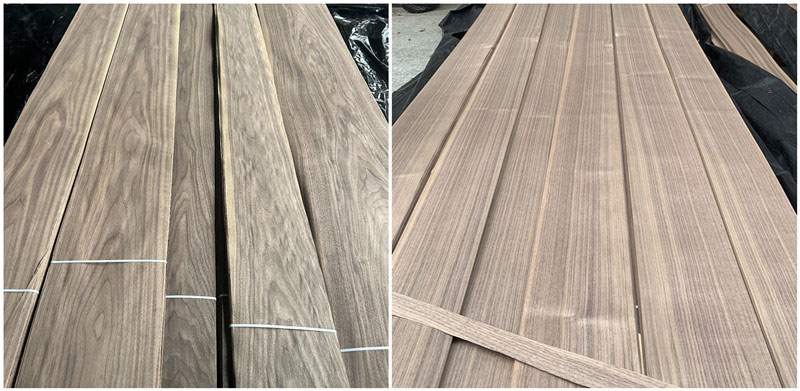
Walnut wood veneer is a thin layer of real black walnut wood, sliced from solid walnut logs.
Black walnut (Juglans nigra) is a hardwood species from North America, valued for its strength, durability, and rich dark color.
Applied to MDF or plywood to make wood panels, furniture, cabinetry, wood doors, and interior surfaces, veneer sheets of walnut bring the natural grain, deep tones, and refined look of solid walnut while using material more efficiently.
2. How to make American walnut veneer?
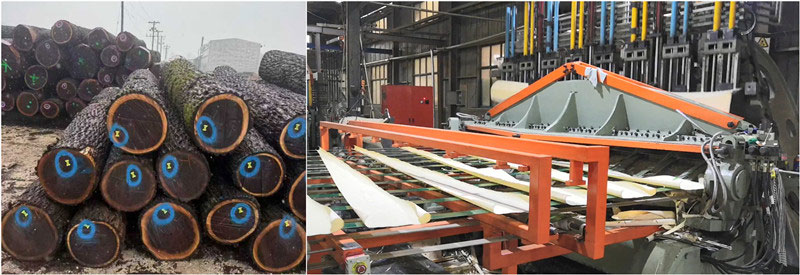
Black walnut veneer is made by carefully selecting high-quality American black walnut wood and removing any unsuitable pieces.
The wood is then steamed to reduce cracking and improve flexibility before slicing.
Different cutting methods, such as flat and rift cuts, are used to create various grain patterns.
After slicing, the veneer is gently dried to prevent warping or cracks.
Each sheet is finally inspected and graded based on grain, thickness, and color to ensure consistent quality for different project needs.
This careful process ensures black walnut veneer is both beautiful and reliable for interior use.
3. Types of walnut veneer
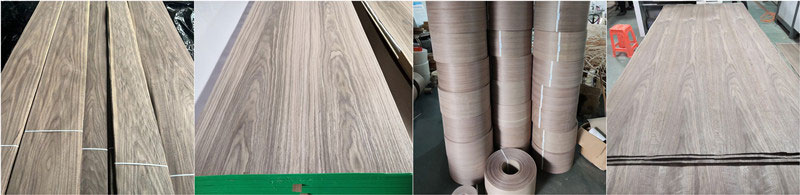
3.1 0.2-0.25mm thin walnut veneer
Thin walnut veneer sheets typically require a backing, which enhances their flexibility, helps prevent cracking, and makes it easier to handle.
We usually use two types of backing: kraft paper and fleece, widely used in molding profile wrapping, furniture making, cabinetry, wall paneling, and walnut veneer plywood and MDF.
Thin walnut veneer is also an effective alternative to 0.4mm and 0.5mm thick walnut veneers, providing the same appearance while reducing thickness and lowering costs.
If you plan to use it for large-scale projects or have budget considerations, this paper thin walnut veneer is a great option.
3.2 0.4mm and 0.5mm standard walnut veneer
Those two thicknesses are our local standard stock thickness, and most manufacturers can supply walnut veneer in those two thickness.
They are also the most widely used thicknesses in various applications.
3.3 1mm and 2mm thick walnut veneer
Compared with the standard thickness, thick walnut veneers offer higher durability and a more realistic texture.
When making high-end furniture, many craftsmen prefer using thick walnut veneers, creating strong demand.
To meet the needs of these customers, our factory also supplies walnut veneers in 1mm and 2mm thickness.
Of course, due to the increased thickness, these walnut veneer sheets are priced higher.
If you want your furniture to look more premium and visually appealing, the thick walnut veneer is an excellent choice.
3.4 3mm and 5mm spliced walnut veneer sheets
For natural American black walnut veneers, 3mm and 5mm are considered relatively thick.
3mm and 5mm thick American walnut veneer sheets are edge-spliced panels crafted from sawn-cut natural walnut veneer sheets.
These thick walnut veneers are carefully joined at the edges to form sheets in standard sizes of 4×8 ft, 4×9 ft, or 4×10 ft, offering both strength and elegance for fine woodworking applications.
• 3mm walnut wood veneer sheets are perfect for luxury cabinet doors, furniture surfaces, and other high-end joinery projects, providing a rich and natural wood texture.
• 5mm walnut wood veneer sheets can be laminated onto plywood or MDF to produce milled or decorative wall panels, adding depth and sophistication to interior spaces.
Their substantial thickness ensures excellent durability, surface stability, and an authentic real-wood finish, making them ideal for custom architectural designs.
3.5 Engineered walnut veneer
Engineered walnut veneer—also known as reconstituted or recon walnut veneer—is produced from fast-growing wood species, such as Ayous and Poplar, making it an eco-friendly alternative to natural walnut.
Engineered walnut veneer has man-made colors and grain patterns.
Its key advantage is consistent color and grain, which creates a clean and balanced look.
If you plan to use veneer for large projects and need good consistency and cost control, engineered veneer is a practical choice.
Our engineered veneer is available in a standard size of 2500 × 640 mm with a thickness of 0.4 mm.
Custom sizes are also available based on your needs.
3.6 Walnut veneer rolls for edgebanding and profiles wrapping
We mainly offer walnut veneer rolls in two types: wrapping and edge banding.
They are made by finger-jointing natural/engineered walnut veneer strips, and both length and width can be customized according to customer requirements.
We provide the veneers in thicknesses ranging from 0.2mm to 2mm.
3.7 Splice-matched walnut veneer layons
In the production of interior doors, wardrobes, and furniture, the way walnut wood veneer layons are matched is crucial for achieving a seamless and sophisticated appearance.
Proper alignment of the grain patterns ensures that each piece enhances the overall aesthetic of the design.
By carefully matching the veneers, designers can showcase the natural beauty of black walnut, with its rich, deep tones and unique grain patterns, creating a visually cohesive look throughout the project.
There are several popular veneer matching techniques to consider when working with black walnut.
For instance, book-matching involves flipping every other veneer sheet to create a symmetrical, mirrored pattern, resulting in a balanced and harmonious design. Slip-matching, on the other hand, aligns the veneer sheets in a linear fashion, maintaining a continuous grain pattern across the surface.
If you’re looking for something more personalized, custom veneer matching options like herringbone matching and random matching are available.
No matter the style or design you’re aiming for, the matching of walnut veneer sheets can greatly influence the final result, creating a refined and timeless finish that complements any interior space.
3.8 Woven walnut veneer
Woven walnut wood veneer offers a unique, artistic design that adds elegance to your projects.
By weaving individual strips of black walnut veneer, we create custom patterns that enhance both beauty and texture.
This veneer strikes the perfect balance of strength and flexibility for various applications.
We offer full customization for woven black walnut wood veneer sheets, allowing you to choose the pattern that best suits your vision.
Whether you have a specific design in mind or need creative guidance, we’re here to bring your ideas to life.
The rich tones and natural beauty of black walnut will elevate your furniture, cabinetry, or architectural elements, creating standout pieces that showcase luxury and craftsmanship.
4. Application of walnut veneer
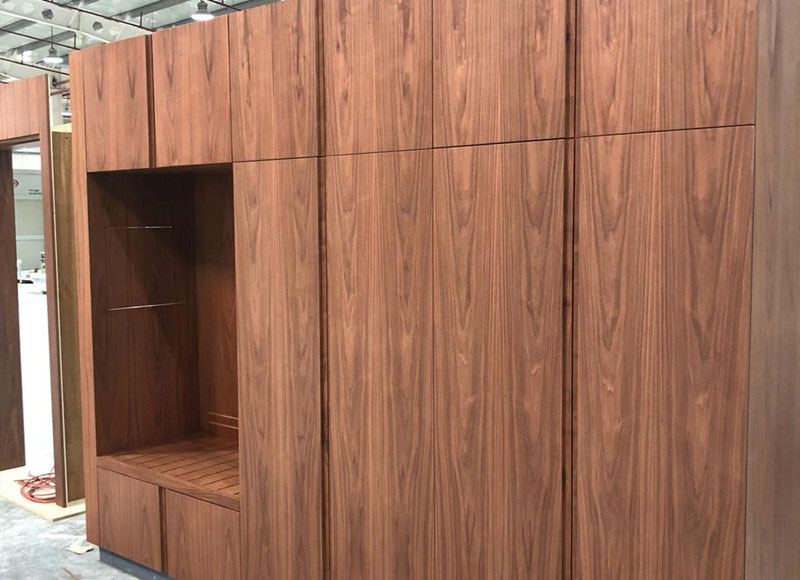
4.1 Walnut veneer panels
Walnut wood veneer sheets can be applied onto wood panels, with substrate options including plywood, MDF, blockboard, particle board, or solid wood.
Substrate thickness and panel sizes can be customized according to customer requirements.
This walnut wood veneered panel can be used for furniture production, interior decoration, and wall panels application.
4.2 Walnut veneer furniture
Additionally, walnut veneer can be directly applied to cabinets furniture surfaces, adding the look and feel of solid walnut to the furniture while reducing costs.
4.3 Walnut veneer door
For home interior wood doors, walnut veneer is high end application.
4.4 Walnut veneer wall panels
American walnut veneer wall panel is one of the most popular choices for wall panelling.
You can choose flat wall panels, fluted wall panels, tambour walnut wall panel, and milled walnut veneer panels.
4.5 Walnut veneer wrapped molding profiles
Walnut veneer, either natural or engineered walnut, can also be applied to wrap moulding profiles, which include skirting, door frames, picture frames, and more.
The substrates can also be selected from plywood, MDF, or solid wood.
5. Why choose our walnut veneers?
5.1 Carefully selected materials
We ensure that only carefully selected logs and raw materials are used, providing you with a variety of products while maintaining consistent high quality.
5.2 Wide range of walnut veneer thicknesses
In addition to standard thicknesses (0.4mm and 0.5mm), we also offer ultra-thin and extra-thick walnut veneer.
If you have specific thickness requirements, please feel free to inquire.
5.3 Extensive export experience
Our team has over 20 years of export experience and has earned the trust of more than 100 furniture manufacturers worldwide.
If you are looking to create high-quality furniture, we invite you to consider working with us.
6. How to choose the right black walnut veneer?
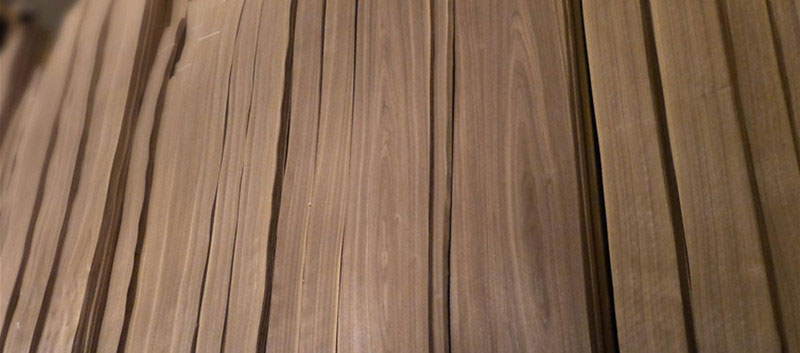
6.1 Natural walnut veneer or engineered walnut veneer?
Walnut wood veneer sheets come in two types: natural walnut wood veneer sheets and reconstituted black walnut veneer.
Each type has its own advantages and disadvantages, some of which we’ve discussed in the section about reconstituted veneers above.
If you still have questions about choosing between natural or reconstituted black walnut veneer, feel free to contact us.
6.2 Grain
The slicing method of walnut veneer sheets determines its unique grain pattern.
Common techniques include flat cut and rift cut to have crown grain and straight grains.
But you can also choose rough-sawn cut walnut veneer, burl walnut veneer, or walnut crotch veneer.
6.3 Thickness
The thickness of walnut veneer is an important factor that affects the price.
In the Chinese foreign trade market, the common thickness of walnut veneer is 0.4mm and 0.5mm.
However, you may need to be aware of the tolerance issue.
When you specify a 0.5mm veneer, the actual thickness produced may be around 0.43mm.
This is one reason why some customers have had negative experiences purchasing veneers from China.
Additionally, we can also produce ultra-thin black walnut veneer, approximately 0.2mm in thickness.
If you need veneers in other thicknesses, please feel free to contact us.
6.4 Grade
Walnut veneer sheets are commonly graded internationally (AAA, AA+, AA, A+, A, AB, etc.) to signify their quality.
However, in China, different factories may have varying grading definitions, which can sometimes lead to confusion during the ordering process.
To avoid potential issues when purchasing walnut wood veneer sheets, it’s recommended to send clear, detailed pictures of the specific type of walnut wood veneer sheets you’re looking for.
This will help ensure that the supplier fully understands your needs and can provide the correct product that aligns with your expectations.
Taking this extra step can save both time and effort, ensuring a smoother, more efficient purchase process and helping you avoid any miscommunication or delays in your project.
6.5 Length and width
Natural walnut veneer sheets typically have a random width of over 100mm.
Reconstituted veneers, on the other hand, are generally available in standard widths of 640mm.
Most clients prefer lengths of 2500mm and above, as these are ideal for pressing onto plywood, MDF, or particleboard in 4x8ft sizes.
For reconstituted veneers, the standard length is typically 2500mm.
However, certain special projects may require veneer sheets up to 3100mm in length.
To meet these diverse needs, we offer a service for custom lengths, including ultra-wide 640mm veneers that can be finger-jointed or provided in rolls, tailored to your specific project dimensions.
6.6 Price
The price of walnut veneer can vary significantly based on factors such as thickness, grade, and any additional features like backing materials (fleece or paper backing).
Thicker veneers or those with superior grades tend to cost more, as do those that come with special treatments or finishes.
Moreover, certain suppliers may offer different options for customization, such as custom sizes or cutting methods, which can also influence the price.
It’s also important to clarify the terms of the sale with your supplier, such as whether the price is based on FOB (Free on Board), CIF (Cost, Insurance, and Freight), or another shipping arrangement.
These terms can impact the overall cost of the walnut veneer sheets, depending on the delivery and insurance fees.
Therefore, understanding the pricing structure and discussing these details upfront can help avoid any misunderstandings and ensure you are getting the best value for your purchase.
7. Walnut veneer in China
In the Chinese wood veneers market, black walnut veneer is considered a high-end decorative veneer, and its demand has continued to grow in recent years.
Although black walnut primarily originates from North America and is not cultivated on a large scale domestically, China has developed a well-established supply chain for processing imported logs into veneer products.
According to industry statistics, China produces approximately 4 million square meters of veneer annually, with black walnut veneer accounting for roughly 10% of this total.
High-end furniture, interior decoration, and commercial projects drive the majority of domestic demand for black walnut veneer.
On the export side, China ships about 500,000 square meters of black walnut veneer per year to markets in Asia, Europe, and North America, mainly for custom furniture and premium interior projects.
Domestic suppliers offer a variety of specifications and color options, which helps black walnut veneer maintain stable competitiveness in both domestic and international markets.
Overall, with the growth of high-end furniture and project-based applications, the demand for black walnut veneer in China is expected to continue rising, further driving advancements in veneer processing technology and supply chain management.
Conclusion
American black walnut is a highly sought-after wood known for its rich, dark brown color and stunning grain patterns.
Its unique appearance and durability make it a top choice for furniture, cabinetry, and other high-end woodworking projects.
This wood is appreciated for its strength, resistance to wear, and natural beauty.
Whether you’re designing elegant furniture or looking for a premium veneer for your project, black walnut offers a timeless aesthetic that complements both traditional and modern styles.
At our company, we offer high-quality American black walnut veneer, available in a variety of thicknesses and finishes to suit your needs.
Whether you’re working on a commercial or personal project, our veneers provide the perfect balance of beauty and durability.
If you’re looking for top-quality walnut veneer for your next project, feel free to reach out to us. We’re happy to help you select the best material and ensure your project exceeds expectations.
Leave A Comment